This piece began as a writing experiment: I randomly selected a page from one of my books and wrote about whatever caught my attention. This time, it was bread.
Inspired by a page from The History of Flavour, page 285.
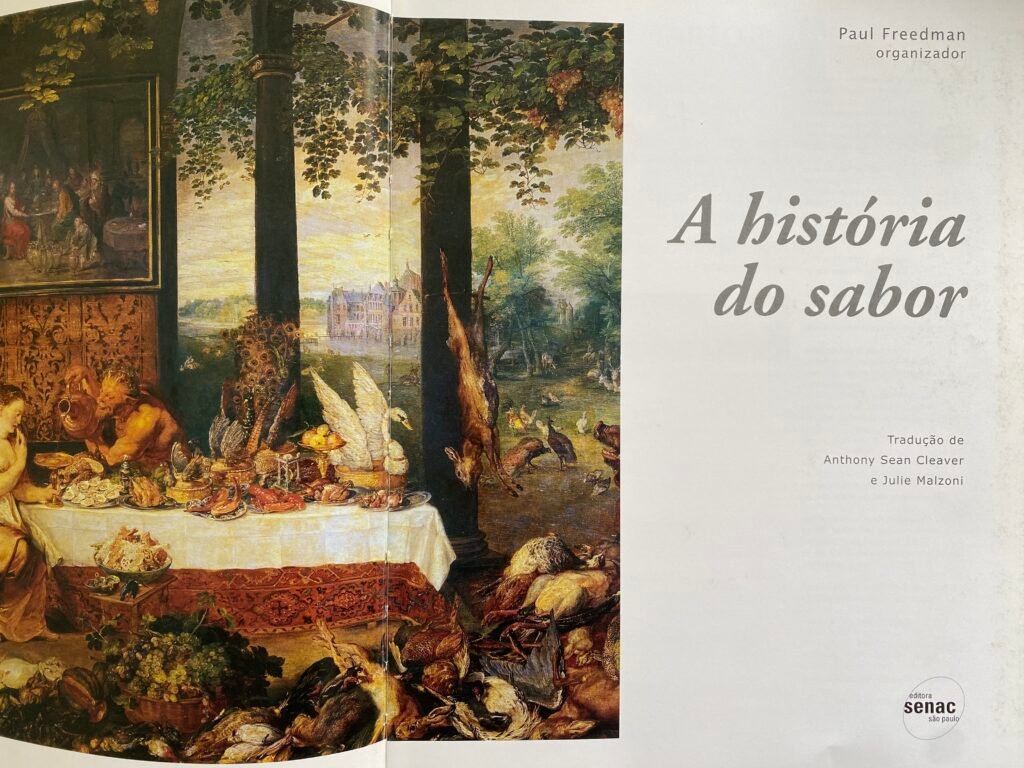
The chapter is titled “Chefs, Gourmets, and Gourmands – French Cuisine in the 19th and 20th Centuries.” On the page I happened to select, the discussion moves from bread and its importance in French society to Auguste Escoffier, often described as the “chef of kings and king of chefs.”
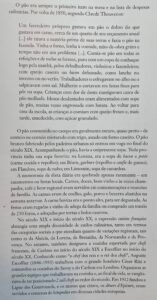
I decided to write about bread.
For centuries, bread was a fundamental part of everyday life. There were no supermarkets as we know them today, and much of what people ate was prepared at home, often using ingredients they grew or raised themselves.
Bread was eaten at every meal and in many different forms. It accompanied soups and was even given to teething children to chew on, helping to soothe their discomfort. Everyday bread was generally dark, made from rye or a mixture of rye and wheat flour. White bread became more widely available during the 19th century, particularly through urban bakeries.
Today, bread remains deeply connected to French culture. From baguettes to pain de campagne, from croissants to brioche, it’s almost impossible to think of these without imagining a visit to a French boulangerie, perhaps just around the corner from your home or hotel.
Even outside France, when visiting an authentic French restaurant, I expect good bread to be part of the experience. And even in restaurants that are not quite so authentic, there is usually a selection of bread served at the beginning of the meal, often with butter or olive oil.
Of course, one of the essential ingredients in good bread is flour, whether wheat, rye or another grain.
A few years ago, I worked in a restaurant in London where the head chef was German. The restaurant served refined dishes inspired by German cuisine, among other influences.
Now you might be wondering: what does this have to do with France or bread?
Although this was about nine years ago, I clearly remember something the chef told me one day:
“The bread we serve has to be of excellent quality, so the flour we use comes from Germany.”
We were in London.
At the time, I wondered whether there was a real difference in quality or whether his comment had something to do with the friendly rivalries that sometimes exist between European countries.
The truth is, I still don’t know whether he was right. I suspect his statement had as much to do with national pride as with the flour itself.
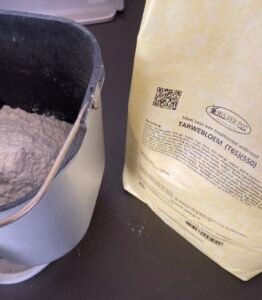
More recently, while living in the Netherlands, I discovered a mill very close to my home: Mulder Pot.
Next to the mill was a shop filled with different types of flour and ingredients for making bread and cakes. The variety was enormous. Their flours were traditionally produced using as much locally grown grain as possible, something I found particularly appealing.
I love the idea of making homemade bread with flour from a local mill. There’s something satisfying about knowing a little more about where the ingredients come from.
And the result? In my experience, much better than the equivalent supermarket bread, although that also depends on my enthusiasm for baking!
Most of the time, I choose the easy option and use my bread machine. Even so, the results rarely disappoint.
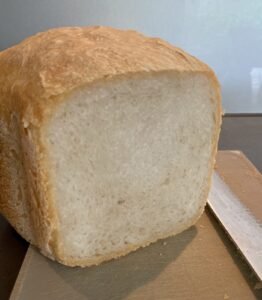
And really, all I need is a little butter or olive oil.